Last year, a contract electronics manufacturer in Ohio lost 47 hours of production time on a single SMT line — not because of a major machine failure, but because of something far more mundane. Operators had to shut down the pick‑and‑place station three times a shift to empty and reload small‑component feeders stored in fixed drawer bays. Each swap took 22 minutes on average. That’s over an hour of daily downtime, all rooted in one simple fact: the storage unit wasn’t designed for speed.
When you add up minutes across dozens of shifts, the cost of slow drawer changeover routinely outruns the capital cost of the storage hardware itself. Yet most teams treat it as an unchangeable operational tax. It isn’t. The bottleneck isn’t human — it’s mechanical. And mechanical problems have mechanical solutions. For teams ready to eliminate this hidden drain, it’s worth taking a closer look at modular quick‑swap storage designs that target exactly this failure mode.
To understand why a quick‑swap approach makes such a radical difference, it helps to first look at what happens inside a standard static drawer setup during a changeover. In most factories, a single drawer pull is an 8‑ to 14‑step sequence:
Finish the current batch and stop the line.
Clear loose components from the feeder area.
Unlock the drawer (often with a tool).
Slide the drawer fully out — sometimes against worn, sticky rails.
Manually extract bins, trays, or dividers.
Sort, label, and store removed components.
Locate and retrieve the next‑job components from a separate storage rack.
Walk back to the line.
Re‑load bins in the correct orientation.
Slide the drawer back in, realign warped slides.
Re‑lock.
Verify placement.
Re‑zero or recalibrate if the drawer doesn’t seat to the original reference position.
Restart the line and run the first‑article check.
Every one of those steps is a source of variation. In a production environment running 20‑plus changeovers a week, even a 10‑second misalignment per step compounds into real money. More importantly, most of these steps don’t add any value — they’re pure waste, the kind Taiichi Ohno would immediately red‑tag.
The root cause isn’t the operator. It’s the design assumption that drawers are passive containers rather than active interfaces. A traditional drawer cabinet is, by nature, location‑fixed and process‑agnostic. It was engineered for long‑run, low‑mix production where a drawer might be accessed once a shift. That assumption collapses the moment you move to high‑mix, quick‑turn work.
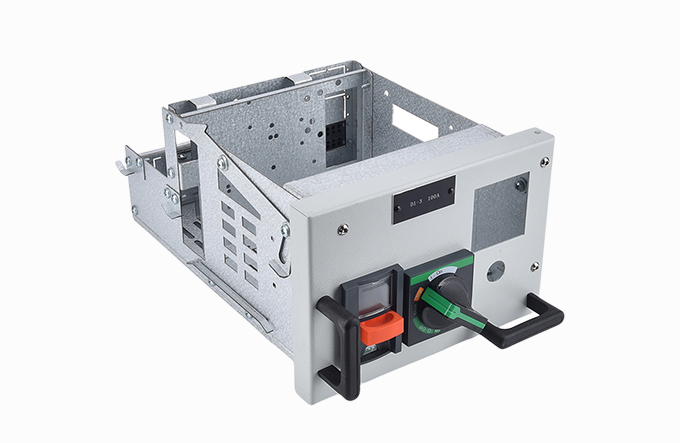
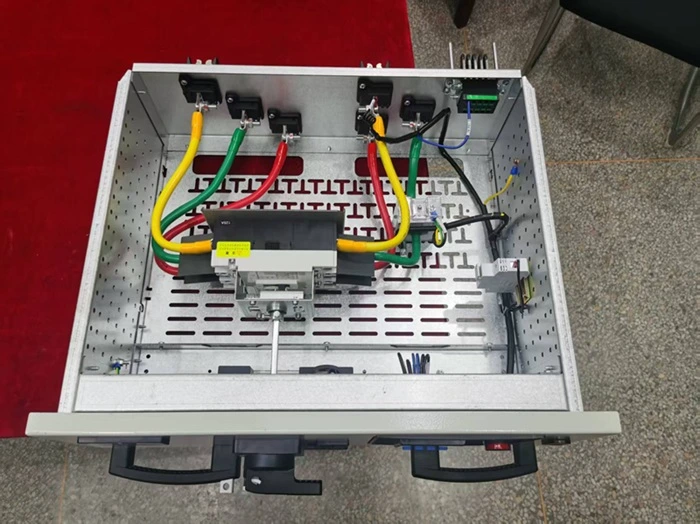
Quick‑swap drawer technology overturns the fixed‑container paradigm by treating the entire drawer as a replaceable module — not unlike how single‑minute exchange of die (SMED) thinking transformed press setup. Instead of emptying and refilling a drawer in situ, the operator removes the entire loaded drawer and inserts a pre‑staged replacement that’s already kitted, inspected, and ready for the next job.
This design shift eliminates steps 5 through 9 in the sequence above. In a typical conversion, a changeover that once took 20 to 25 minutes drops to under 90 seconds. That’s not a rounding error — it’s an order‑of‑magnitude gain. In lean terms, it turns internal setup time into external setup time. The only time the line is down is during the physical drawer exchange; all kitting, restocking, and inspection happens off‑line while the machine is still running the previous job.
Three mechanical features make this possible:
Repeatable kinematic mounting interfaces. Instead of standard slide‑rail friction fits, quick‑swap drawers use precision‑machined tapered pins, ball‑lock mechanisms, or dovetail plates that guide the drawer into its final position with sub‑millimeter repeatability. This means no re‑teaching robot pick points, no recalibrating vision systems, and no first‑article scrap from a mis‑seated tray.
Tool‑less, single‑motion latching. The best designs allow an operator to release and extract a drawer in one motion — often with a single hand — while wearing cleanroom gloves. There’s no separate locking step because the latch is integral to the handle mechanism. When it locks, you know it’s seated.
Identical docking envelopes for all drawers. In a quick‑swap system, every drawer slot in the cabinet is mechanically identical and accepts any drawer of the same form factor. This creates true interchangeability, so the kitted drawer for job B can go into any open slot, eliminating routing confusion.
In facilities where cross‑training is a priority, this kind of foolproof interface has a second benefit: a new operator can execute a production‑ready drawer change after a five‑minute walk‑through. The system constrains the action so tightly that orientation errors become physically impossible.
Not every system that claims to be “modular” actually delivers zero‑point repeatability. If you’re evaluating hardware for a high‑frequency changeover cell, here are four non‑obvious criteria that separate genuine quick‑swap capability from marketing language:
1. Drawer-to-frame reference repeatability. Ask for a specification, not an anecdote. A credible manufacturer will quote a mounting repeatability figure — typically ±0.05 mm or better in X and Y — verified with a dial indicator or laser tracker. If the data sheet only talks about “rugged construction” without a number, the system hasn’t been characterized. Without a numerical tolerance, you’ll be the one doing the characterization on your line.
2. Off‑line staging compatibility. The entire value of quick‑swap comes from offline prep. Confirm that the drawers can be stored, transported, and pre‑inspected on a dedicated staging cart or rack that mirrors the line‑side docking interface. If the drawer needs to be laid flat on a bench to load components, you’ve lost half the external setup advantage. For a real‑world example of how integrated staging changes the equation, see how a purpose‑built drawer unit handles off‑line kitting without breaking the docking alignment.
3. Contamination resistance of the locking mechanism. In powder‑coating, food processing, or any environment with airborne particulates, a quick‑swap latch that gums up after two shifts is worse than a bolted‑down drawer. Look for sealed‑pin designs, corrosion‑resistant detents, and mechanisms that shed debris rather than trap it. One practical test: ask if the mechanism has been cycle‑tested in a dusty environment to at least 100,000 cycles without maintenance. A reputable firm will have that test data, often referencing ISO 14644 cleanroom ratings or equivalent ruggedization standards.
4. Safety interlocks that don’t slow you down. Fast doesn’t have to mean unsafe. The best quick‑swap systems incorporate passive lockouts that prevent the drawer from being pulled when the machine is in cycle, without requiring a separate conscious action from the operator. When the machine goes into pause, the latch releases automatically. When it cycles, the drawer is mechanically blocked. The operator’s motion path remains unchanged, so the safety layer adds zero seconds to the changeover.
Reducing drawer‑related downtime isn’t a departmental win — it’s a strategic one. In contract manufacturing, where margins often hover in the single digits, an extra 30 minutes of machine availability per day translates directly into capacity to take on more short‑run, higher‑margin jobs. It’s the difference between turning away a rush order because you can’t afford the setup time, and accepting it because your changeover overhead is negligible.
One sheet‑metal fabricator in the Midwest quantified this after retrofitting their laser‑cutting workcells with hot‑swappable material drawer modules. Before the retrofit, they ran three job changeovers per shift, each consuming roughly 18 minutes of nozzle and material swaps at the drawer level. After the switch, changeover time dropped to 95 seconds. That freed up 51 minutes a day, which they re‑allocated to a fourth shift‑changeover slot — essentially adding 12% more productive cutting time without buying a single new laser. If that math sounds attractive for your operation, you can configure a rapid‑change storage setup that fits into an existing cell footprint.
It’s also worth noting that quick‑swap hardware pays a quiet dividend in data quality. When a drawer re‑seats with high positional repeatability, the sensor offsets and tool‑path references remain valid. You eliminate the small but chronic measurement drift that comes from operators slightly misaligning a standard drawer cabinet after every cleanout. In precision processes — wire bonding, optical inspection, dispensing — this drift is often the hidden culprit behind borderline CPK numbers that nobody can fully explain. Solving it mechanically is more reliable than solving it with more frequent calibration routines.
For decades, industrial storage was viewed as passive infrastructure: a drawer cabinet was just a place to put things. The dominant purchasing criteria were cubic capacity, load rating, and price per drawer. Those still matter, but they’re no longer sufficient. In a production environment where every minute of machine time is measured against a takt clock, storage has become part of the process flow. When a drawer changeover is on the critical path, that drawer isn’t just storage — it’s a tooling interface, a setup vehicle, and a timekeeper.
The practical takeaway is straightforward. If your changeover logs show more than five minutes per shift consumed by drawer‑level material handling, the design of your storage hardware is a bigger constraint than you think. And it’s a constraint with a surprisingly simple fix. Instead of endlessly optimizing how people work around slow hardware, swap the hardware. The difference between a fixed drawer and a quick‑swap module is a one‑time investment that repays itself in months — not through accounting magic, but through minutes that turn back into machine hours.
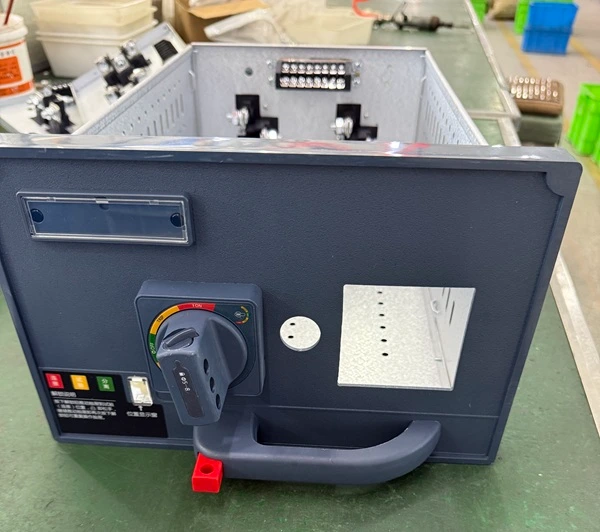
If you’re exploring whether a quick‑swap architecture fits your specific line, take a look at how MOLDVOLT’s drawer system is engineered for under‑two‑minute drawer exchanges in production environments. The fastest changeover is the one you don’t even notice on the OEE dashboard.
This article draws on SMED methodology originally formalized by Shigeo Shingo and operational metrics aligned with ISO 22400‑2 key performance indicators for manufacturing operations. All customer examples are anonymized composites based on real‑world implementations.
pubdate: 2025/10/09 2026/07/22
Reduce Downtime with Quick‑Swap Drawerspubdate: 2025/10/09 2026/07/15
How to Organize Spare Parts for LV Cabinetspubdate: 2025/10/09 2026/07/07
5 Daily Checks for Drawer Switchgear – A Maintenance Technician’s Guide