You push open the electrical room door. The faint hum of transformers is the first thing you notice, but your eyes go straight to a long line of grey panels. Some of them have drawer units with position indicators showing “connected.” Others are in “test” or “isolated” after last night’s shutdown. For most maintenance teams, this is the morning ritual. But what exactly are you checking?
The modular, draw-out design of modern LV panels was meant to make maintenance safer and isolation faster. Yet without a consistent daily routine, small signs of stress inside a drawer unit can go unnoticed for weeks – until thermal runaway or a ground fault forces an unplanned outage. In my years working with facility electrical systems, I’ve found that a short, focused checklist – just five items – catches 80% of potential issues before they escalate.
If you’re looking for a distribution solution that makes this checklist inherently easier to complete, it helps to start with equipment designed for true front-access simplicity. Learn more about MOLDVOLT’s approach to maintenance-friendly drawer modules. But regardless of the brand you use, the following five daily checks will build a solid foundation for reliability.
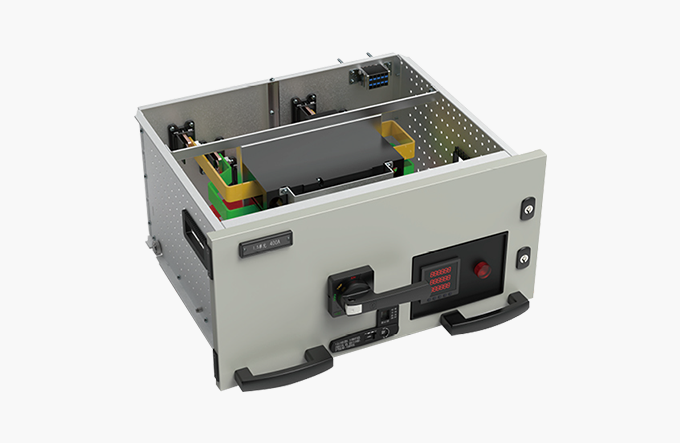
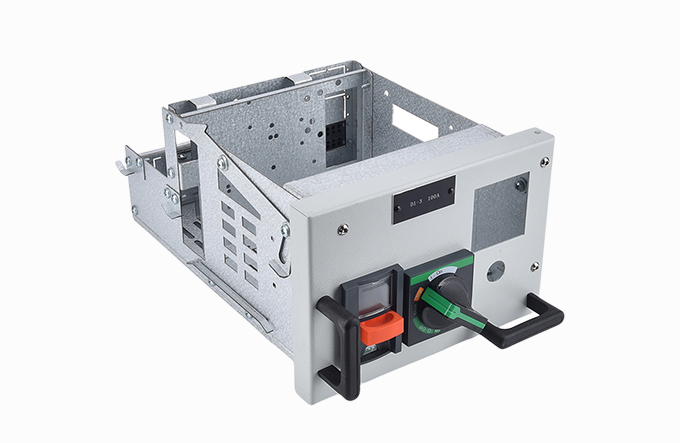
Every morning, walk the lineup and glance at the position indicators. A drawer that appears “connected” but isn’t fully racked in can create high-resistance contact and lead to dangerous heating. Gently push the drawer handle – it should be firmly latched. Don’t force it; instead, feel for any looseness that might indicate worn interlock cams.
Also, check that the mechanical interlocks prevent you from opening the door or withdrawing the unit while the circuit breaker is closed. Attempt to turn the racking handle without first opening the breaker – the interlock should block you. If it doesn’t, tag it immediately for corrective work. Many facilities overlook this daily interlock validation because “it worked last week,” but sticking interlocks are often the first sign of dust buildup or mechanical fatigue inside the compartment.
Touch isn’t your only ally here. Before you open any door, run the back of your hand along the enclosure surfaces near the drawer’s main contacts – typically the rear and side of the compartment. Hot spots will feel radically different from adjacent panels. Thermographic inspection windows or infrared viewing panes, if installed, let you scan busbar connections and circuit breaker terminations without breaking the arc-flash boundary. If you don’t have windows, a non-contact infrared thermometer pointed through ventilation grilles is the next best thing.
Look for discoloration on drawer fronts, indicator bezels, or any surface paint. Bubbling, yellowing, or dark streaks suggest past over-temperature events. If you spot these, do not simply note it in a log – schedule a thermographic survey at the earliest possible shutdown window. A true daily check means trending these observations, not just ticking a box. Many facilities have started specifying a voltage switchgear cabinet with built-in thermal sensors precisely to automate this visual scan, but for most older installations the human eye is still the first line of defense.
Drawer switchgear relies on convection cooling through carefully placed vents. Any obstruction – dust, storage boxes placed on top of the panel, even a misplaced clipboard – can disrupt airflow and raise internal temperatures by 10°C or more. During your daily round, visually confirm that the intake grilles at the bottom and exhaust vents at the top of each section are unobstructed. Use a flashlight to look for excessive dust accumulation on fan filters (if equipped).
In environments with airborne particles – cement plants, textile mills, grain handling – this step is non-negotiable. Conductive dust settling inside a drawer compartment can create tracking paths across insulators. If you notice a fine layer of dust forming daily, the ventilation design may not be adequate for the application. Some modern enclosures feature positive pressure filtered air systems that dramatically reduce internal contamination. Explore how modular drawer cabinets can be configured for dusty environments.
A quick but deliberate scan of the panel’s meters, lights, and multi-function displays can reveal abnormalities that don’t yet trigger alarms. For each active drawer unit, check:
Voltage readings across phases (should be balanced within 2%)
Current draw on each phase (look for imbalances or creeping increases)
Power factor, if displayed (a sudden drop may indicate motor issues downstream)
Indicator lights for “control power on,” “breaker closed,” and any alarm LEDs
A phase imbalance that was 3% last month and is now 6% might not trip protection, but it’s a clear signal to investigate loose connections or an unequal load distribution. Note it in your daily log and pass it to the shift change. When selecting a voltage switchgear cabinet, many engineers now prioritize integrated digital metering that logs these daily snapshots automatically, so trends become instantly visible rather than relying on manual clipboard entries.
This doesn’t mean testing the trip curve of every circuit breaker every morning. It does mean pressing the “lamp test” button on each drawer’s indicator panel to confirm that alarm LEDs aren’t burned out. If drawer units have local emergency stop buttons (common on motor feeder modules), press one non-critical stop and verify that the correct contactor drops out, then reset it. This simple action checks the control wiring integrity and the contactor’s mechanical movement – which can stick after long idle periods.
Listen for any unusual buzzing or chatter from contactors or relays when drawers are in the “connected” position. A new hum or a rattling relay often precedes coil failure. By catching it early, you can plan a replacement during the next maintenance window instead of dealing with a midnight callout.
Even with a solid checklist, these pitfalls creep in:
Skipping the “connected” position verification after a shift change. A drawer might have been racked out for isolation and not fully reinserted. Always verify, never assume.
Relying only on built-in temperature sensors. Sensors can fail or be mispositioned. Cross-check with a hand scan or spot thermometer periodically.
Ignoring “nuisance” alarms. A control circuit fault LED that resets itself isn’t a ghost – it’s an intermittent fault begging for attention.
Failing to document. An unlogged trend isn’t a trend. Use a simple digital checklist or CMMS entry so morning-to-morning changes become actionable history.
Sometimes a consistent issue – like dust ingress despite clean vents, or persistent thermal hotspots at the stabs – points to a design mismatch rather than a maintenance gap. I recall a facility where drawer units in a packaging line had to be cleaned internally every three days to prevent tracking. The root cause was an IP3x ventilation design operating in an area that needed IP5x dust protection. Swapping to a differently rated enclosure solved the problem permanently.
If your daily checks are consistently highlighting the same issues, it may be time to evaluate whether your current LV distribution equipment matches your real operating environment. Reliable infrastructure starts with a voltage switchgear cabinet that’s engineered for the specific stresses of your facility – not a generic solution that forces you to compensate with extra maintenance hours.
A daily check only works if it’s quick, consistent, and valued. Make it part of the morning start-up walk – no more than 15 minutes for a lineup of 20 drawers. Provide a laminated checklist on a small clipboard at the first panel. Rotate the responsibility among team members so everyone develops an eye for subtle changes. Once a month, have a senior technician review the log and look for degradation trends. This turns a simple routine into a powerful early-warning system that extends equipment life and prevents expensive emergency repairs.
The best maintenance routine is one that the equipment supports naturally. When drawer units are easy to access, metering is clearly visible, interlocks are robust, and ventilation is engineered for the environment, the five daily checks become intuitive rather than burdensome. If you’re planning a new installation or facing a retrofit, consider how the physical design of the panel will shape the next 20 years of daily walk-arounds. Explore MOLDVOLT’s drawer-type LV switchgear design philosophy.
pubdate: 2025/10/09 2026/07/07
5 Daily Checks for Drawer Switchgear – A Maintenance Technician’s Guidepubdate: 2025/10/09 2026/06/30
Solve Loose Plug‑in Contact Connectionpubdate: 2025/10/09 2026/06/23
4 Common Insertion Mistakes That Void Warranty