The 3 a.m. call came from a food processing plant in Ohio. A main distribution panel had tripped, and the maintenance team spent 48 minutes searching for a replacement control fuse — not because they didn’t have it, but because it was buried in an unmarked cardboard box behind a stack of obsolete contactor coils. The part itself cost $12. The downtime cost north of $18,000.
If that story makes you wince, you already know: spare parts management for power distribution enclosures isn’t a warehouse chore. It’s a reliability strategy that directly hits your plant’s OEE numbers. But organizing those spares doesn’t need a million-dollar CMMS overhaul. It starts with a framework that turns chaos into clarity — and, when paired with the right physical infrastructure, becomes almost self-sustaining.
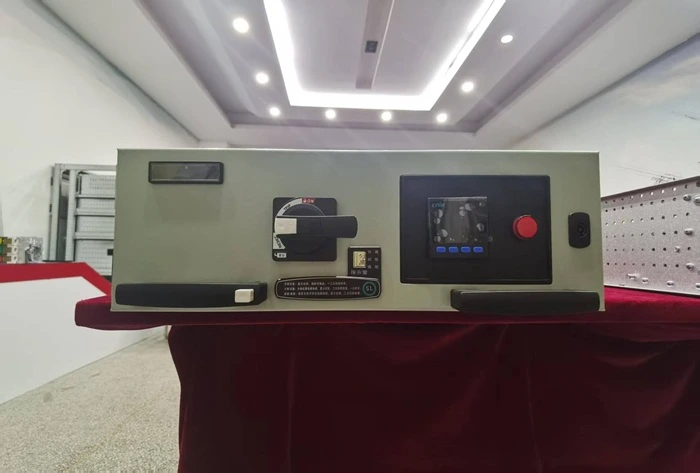
Most facilities treat spare parts the same way they did forty years ago: shelves, bins, maybe a spreadsheet. The problem is, low-voltage distribution equipment has evolved dramatically — modular designs, smarter protection relays, compact footprints — but storage practices haven’t kept pace. You end up with three simultaneous headaches:
Visual similarity, functional difference. A 24V DC power supply and a 230V AC auxiliary transformer look nearly identical to a tired technician at 2 a.m. Wrong swap = smoke.
Criticality blindness. You might have six identical circuit breakers, but only one is the unique main incomer with a specific trip curve. Without criticality tagging, it’s just another grey box on the shelf.
Drawer-of-doom syndrome. That single drawer with fuses, terminal blocks, ferrules, relay bases, and a lonely screwdriver. It saves space. It also guarantees that every retrieval takes five minutes.
The root cause isn’t sloppiness — it’s that the storage system hasn’t been designed with the same deliberate modularity as the cabinets themselves. When you’re managing spares for today’s compact power distribution assemblies, the organization logic needs to mirror the electrical architecture. This is where a structured approach pays back immediately.
Let’s walk through a four-step method that a mid-sized automotive supplier in Michigan used to cut their mean time to repair (MTTR) by 34% in six months. No expensive software required at the start.
Take everything out. Yes, everything. Place every component on a large table and sort into three piles:
Critical & fast-moving (expected use within 6 months, failure stops production)
Slow-moving / insurance (one-off items, obsolete but still-in-use units)
Obsolete / unknown (no matching asset, no label, no record)
Be ruthless with pile three. I’ve seen teams hang onto outdated electromechanical relays for cabinets that were decommissioned in 2012. If it doesn’t serve an active asset, recycle it responsibly or send it to a surplus electronics broker. The freed space alone is worth the effort.
The most common mistake is organizing by physical dimensions — putting all small DIN-rail components together regardless of what they do. That feels neat but fails during a failure event. When a motor feeder trips, you don’t need “a small component,” you need a specific overload relay with a specific amp range.
Instead, build categories that match the functional sections of your power distribution panels:
Protection devices (fuses, MCBs, MCCBs, surge arresters)
Control & signaling (relays, contactors, timers, indicator lamps)
Power supply (transformers, power supplies, battery units)
Connection & cabling (terminal blocks, busbar connectors, cable lugs)
Enclosure accessories (hinges, locks, gaskets, mounting plates)
Within each functional group, sort by rating, then by criticality. Label bins with the function first, rating second. “MCB 6A C-curve” instantly tells a technician what it is and where it goes. If you’re interested in seeing how a well-organized modular cabinet can simplify this categorization from the design stage, you can explore MOLDVOLT’s modular cabinet configurations — the internal partitioning naturally suggests a spare parts grouping logic that you can adopt in your storeroom.
A label maker is your best friend, but only if you follow a standard. We recommend a two-line label format:
Line 1: Functional group + rating (e.g., “CONTROL – 24VDC Relay Base”)
Line 2: Asset tag or cabinet ID where it’s used + “CRITICAL” flag if applicable (e.g., “MCC-3 – Incomer Only”)
Pair this with a physical location code on your shelf — Bay A, Shelf 2, Bin 14 becomes A-2-14. Put the same code in your maintenance log or CMMS. Now when a work order says “Replace A-2-14,” there’s zero searching. An electrical contractor I worked with reduced spare-part retrieval time from an average of 14 minutes to under 90 seconds just by implementing this location coding on a Saturday morning.
Also, add a simple red dot sticker to any component that requires specific commissioning or parameter settings before installation. A protection relay that must be programmed with a curve file should scream for attention, not blend in.
This step moves you from “organized storeroom” to “resilient maintenance ecosystem.” For each spare part location, link it to the parent asset in your records. When a cabinet gets upgraded or modified, a trigger flags the associated spares for review. I’ve seen facilities purchase $4,000 in spare PCBs for drives that had been replaced two years prior — simply because nobody closed the loop.
If you use a simple spreadsheet, add a column “PARENT ASSET ID” and “LAST REVIEW DATE.” It’s low-tech but effective. If you’re on a CMMS, link the spare parts inventory to the asset hierarchy directly. The key is closing the information loop so that when the physical cabinet changes, the spares shelf changes with it.
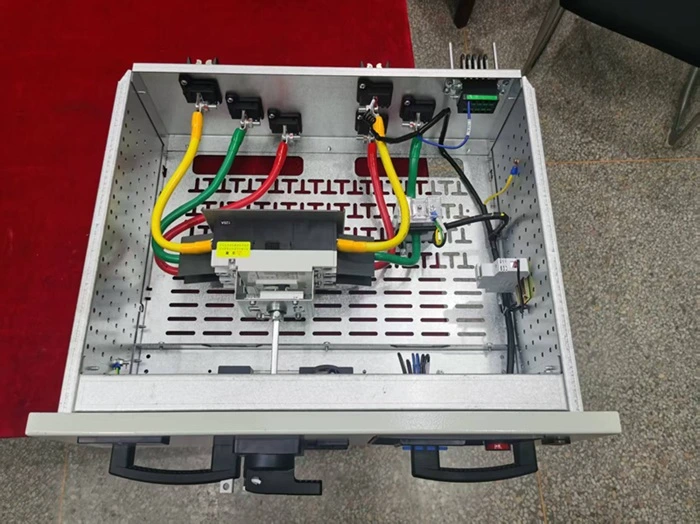
Even after a good setup, a few subtle traps can degrade your results:
Over-buying “just in case.” A common knee-jerk reaction after an unplanned outage is to double the safety stock. Without analyzing actual failure rates, you’re just burning cash and shelf space. Use historical work order data to set min/max levels, and review quarterly.
Ignoring environmental storage. Many precision electronic components degrade faster in a hot, dusty mezzanine than they do in service. A simple sealed plastic tote with a desiccant pack inside can extend the shelf life of a spare protection relay significantly. Temperature and humidity matter.
Treating all cabinets the same. A feeder cabinet serving a single conveyor has a very different spares profile than the main distribution board feeding an entire production hall. Your stocking strategy should reflect that hierarchy. For the main distribution points, a deeper, more structured spares inventory is justified. For end-point panels, a lean, just-in-time approach often works better.
One of the most underrated levers in spare parts management is the physical design of the enclosure itself. Cabinets built on a truly modular platform with standardized internal form factors mean that across your fleet, the same type of component lives in the same physical position. This drastically reduces the variety of spares you need to stock. Instead of carrying five different sizes of a component, you might carry just two, and those two fit 80% of your assets.
This design philosophy also streamlines the replacement process. When every cabinet of a given type has the same internal layout, a technician can almost perform a swap on muscle memory, and the spare-parts labels correspond neatly to physical positions.
If all this feels like a lot, don’t try to boil the ocean. Here’s a scaled-down, 90-day plan that yields visible results without disrupting daily operations:
Days 1–7: Pick one critical production line. Triage and categorize all spares for the LV cabinets on that line only. Set up functional grouping and location coding just for that area.
Days 8–30: Run with the new system on that one line. Collect feedback from the maintenance technicians who actually use it. Adjust labels or groupings based on their input — ownership is crucial.
Days 31–60: Expand to two more lines or areas, incorporating lessons learned. Start linking spares to parent assets in your CMMS or spreadsheet.
Days 61–90: Audit the system. Measure the change in MTTR for the targeted lines. Share the win with management to secure support for a wider rollout.
During this rollout, you’ll likely discover that certain cabinets, particularly older or non-standardized ones, are the root cause of much of your spare parts complexity. That’s a valuable insight for your capital planning. When it’s time to upgrade those problematic units, prioritizing enclosures that align with a common modular platform simplifies your inventory permanently.
The Ohio plant from our opening story now has a color-coded bin system, criticality tags, and a simple asset-linked register. Last quarter, they had two unexpected power interruptions. Both were resolved in under 12 minutes, with zero incorrect part pulls. The $12 fuse still costs $12 — but now it’s found in 20 seconds.
Organizing spare parts isn’t about tidiness for its own sake. It’s about respecting the operational reality that every minute of downtime costs real money, and that skilled technicians deserve a support system that doesn’t fight them. If you’re aiming for a step-change improvement, pairing smart organization practices with enclosure technology that’s built around standardization and ease of service can make the entire maintenance workflow lighter. To explore a platform that’s designed with exactly this philosophy, you can find out more about MOLDVOLT’s integrated cabinet approach.
pubdate: 2025/10/09 2026/07/15
How to Organize Spare Parts for LV Cabinetspubdate: 2025/10/09 2026/07/07
5 Daily Checks for Drawer Switchgear – A Maintenance Technician’s Guidepubdate: 2025/10/09 2026/06/30
Solve Loose Plug‑in Contact Connection