Globally, electrical distribution infrastructure is undergoing its most significant transformation in decades. The question is no longer if you should modernize your power systems—but when and how to keep pace.
According to market data, the global electrical power distribution equipment market stood at approximately 94.2billionin2025,withprojectionsreaching94.2billionin2025,withprojectionsreaching184.14 billion by 2034 at a compound annual growth rate of 7.73%. Behind these figures lies a fundamental shift: end-users across industrial plants, data centers, commercial buildings, and renewable energy installations are demanding smarter, safer, and more sustainable solutions.
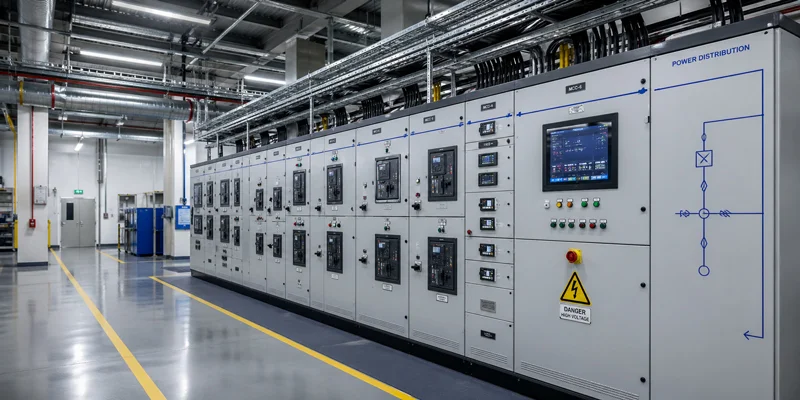
So what exactly is changing? In this article, we’ve analyzed the industry landscape and identified five defining trends that will dominate electrical distribution strategies in 2026 and beyond.
For decades, distribution panels were essentially passive components—they delivered power and provided basic protection, but offered little visibility into system health. That era is ending.
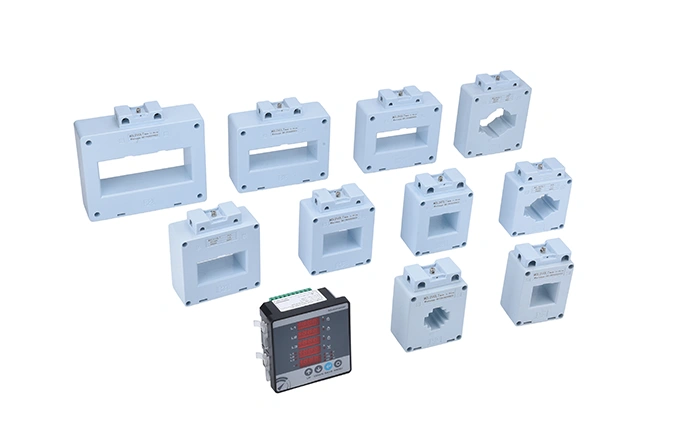
Modern power distribution systems now integrate embedded IoT sensors, communication modules, and cloud-based analytics platforms that transform how facility managers monitor and control electrical networks. Real-time access to parameters such as temperature, current load, and energy consumption is becoming standard practice rather than the exception.
According to a 2026 industry report from The Business Research Company, major trends in the forecast period include growing integration of IoT-enabled monitoring and control features alongside advancements in digital protection, communication, and diagnostics. What does this mean for end-users? It means moving from scheduled, time-based inspections to condition-based strategies driven by live operational data.
One manufacturer has expanded its connected switchgear portfolio to deliver real-time condition monitoring and predictive maintenance, cutting operational costs by up to 30% through more efficient equipment health management. The system eliminates hazardous exposure to live parts, uses 92 percent fewer busbar components, and reduces electrical joints by 90 percent—dramatically improving both safety and availability. For facilities pursuing Industry 4.0 targets, these capabilities are becoming non-negotiable requirements.
If your current power distribution system operates as a “black box,” you may be missing opportunities to optimize performance and prevent costly failures. The ability to see exactly what’s happening inside each panel—in real time—is no longer a luxury; it’s a competitive necessity.
Facility space is at a premium, particularly in urban data centers, high-rise buildings, and retrofitted industrial sites where every square meter carries significant cost. Traditional distribution equipment often consumes floor space inefficiently, forcing engineers into difficult trade-offs between reliability and spatial constraints.
The solution? Modular, compact architectures.
Industry sources report that modern cabinets equipped with modular layouts, which integrate protection, metering and control functions into highly condensed configurations, can achieve cabinet volume reductions of 30% to 50% compared to conventional products. These compact designs don’t sacrifice performance—in fact, they often deliver enhanced thermal management and improved short-circuit withstand capabilities.
One notable innovation in this space achieves a physical footprint reduction of up to 25% compared to equivalent technologies while also improving energy efficiency by up to 20% through reduced heat dissipation. That’s a significant gain when you’re designing a new data hall or retrofitting an existing substation.
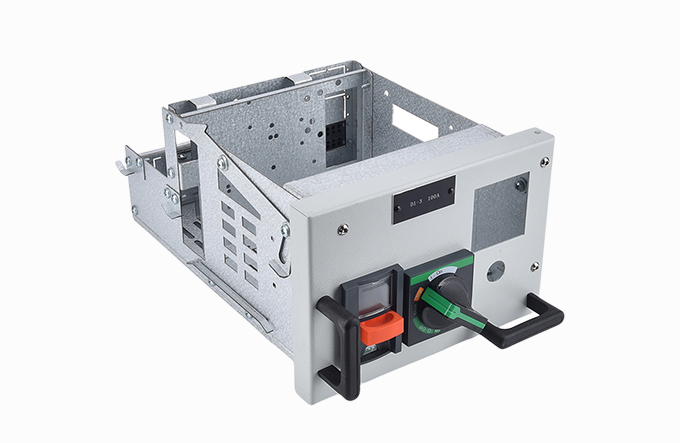
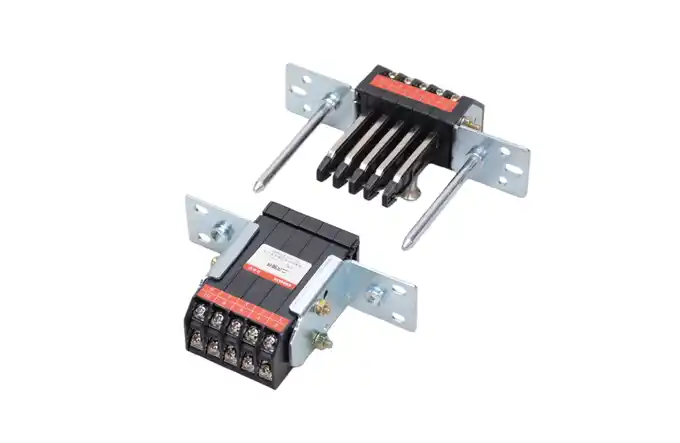
Beyond space savings, modularity brings operational advantages. Configurations can be scaled on demand, spare parts inventories become more predictable, and upgrades can be implemented without overhauling entire switchboards. Components such as withdrawable units and plug-in modules allow maintenance teams to replace individual elements while keeping the rest of the system operational—a critical capability in continuous-process industries.
Environmental regulations are rewriting the rules of electrical equipment design. Perhaps the most significant shift in 2026 centers on the phase-out of sulfur hexafluoride (SF₆), a gas widely used for insulation and arc extinction in conventional equipment but recognized as a potent greenhouse gas with an exceptionally high global warming potential.
New regulations coming into effect across Europe in 2026 are accelerating the transition to SF₆-free alternatives. Major industry players are responding with innovative designs that employ vacuum technology or clean air alternatives. Vacuum-based systems, for instance, eliminate harmful gases entirely while maintaining reliable arc extinction and delivering lower contact resistance, which translates into reduced energy losses during normal operation.
This regulatory-driven shift coincides with broader corporate sustainability commitments. Facility managers are increasingly required to report not just operational metrics but also environmental impact indicators across their electrical infrastructure’s lifecycle. Choosing energy-efficient, low-loss components and environmentally friendly insulation materials is becoming a procurement priority.
If your organization has set carbon reduction targets, the type of power distribution equipment you specify—and the gases it relies on—will directly affect your ability to meet those goals.
Electrical safety has always been a priority, but the standards framework governing power distribution equipment has evolved significantly.
The IEC 61439 series now establishes comprehensive design rules for assemblies up to 1,000V AC or 1,500V DC, mandating verification of temperature rise limits, short-circuit withstand strength, dielectric properties, and protection against electric shock. What’s noteworthy about this standard is that it eliminates the old distinction between Type-Tested Assemblies and Partially Type-Tested Assemblies—requiring all assemblies to meet identical safety benchmarks regardless of verification method.
Forms of internal separation—from Form 2b through Form 4b—define specific levels of arc fault containment. These provisions are not merely academic; they directly affect whether an internal fault propagates to adjacent compartments and whether personnel performing routine tasks remain protected.
According to industry guidance published in March 2026, applying the relevant parts of the IEC 61439 series to all distribution assemblies reduces the likelihood of both legal and operational failures, providing a defensible framework for compliance and quality assurance. For procurement professionals and facility owners, verifying full conformance with applicable standards is not just about meeting minimum legal obligations—it’s about managing long-term liability and protecting personnel.
The final trend—and perhaps the most transformative for operational teams—is the integration of artificial intelligence into condition monitoring and maintenance planning.
Traditional maintenance strategies fall into two categories: reactive “fix-it-when-it-breaks” approaches, and preventive time-based schedules that often lead to unnecessary component replacement. Neither is optimal. AI-powered systems offer a third path: predicting failures before they occur using real-time data analysis.
Advanced condition monitoring is reshaping how electrical assets are managed across industrial environments, enabling a shift from reactive or time-based maintenance to data-driven, condition-based strategies.
The latest intelligent cabinets integrate AI algorithms capable of accurately predicting contact wear, arc-extinguishing chamber life, and other key component degradation indicators by analyzing historical load curves, temperature rise data, and fault records. When preventive maintenance replaces traditional post-fault repair based on these predictions, system failure rates can be reduced by more than 60%.
This capability translates directly into operational savings. Unplanned downtime in critical facilities can cost tens of thousands of dollars per minute. The ability to schedule maintenance precisely when it’s needed—not sooner, not later—optimizes both equipment lifespan and labor resources. Furthermore, data collected continuously from commissioning through end-of-life improves prediction accuracy over time, creating a virtuous cycle of reliability improvement.
If your maintenance team still follows a calendar-based schedule, you might be performing unnecessary work while missing early warning signs of impending failure. AI-driven maintenance shifts the equation from “how often” to “what condition.”
The five trends outlined above are not isolated developments—they’re converging. Digital switchgear supports predictive maintenance. Modular designs incorporate sustainability features. Enhanced safety standards apply equally to traditional and AI-enabled equipment.
For engineers and facility managers evaluating their next power distribution investment, the question is straightforward: does your current approach address these five dimensions? If not, 2026 is the year to close those gaps.
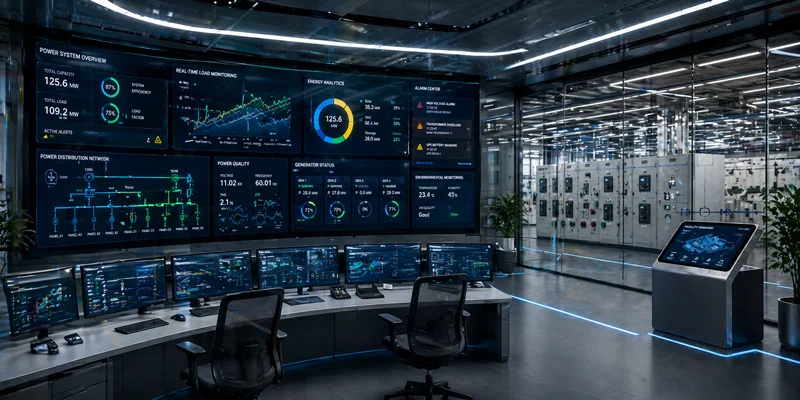
When selecting suppliers and specifying equipment, prioritize those who demonstrate real-world expertise across digital integration, modular flexibility, sustainable design, safety compliance, and predictive capabilities. Request verified case studies, ask about third-party certifications, and ensure that proposed solutions align with both your immediate operational requirements and your long-term infrastructure roadmap.
Interested in how modern electrical power distribution systems can be tailored to your facility’s specific needs? Explore component-level solutions from XHONELE to see how modular building blocks support smarter, safer power management.
Disclaimer: The information provided in this article is for general informational purposes only and does not constitute professional engineering advice. Readers should consult qualified electrical engineers and verify all specifications against applicable local codes and project requirements.
pubdate: 2025/10/09 2026/07/15
How to Organize Spare Parts for LV Cabinetspubdate: 2025/10/09 2026/07/07
5 Daily Checks for Drawer Switchgear – A Maintenance Technician’s Guidepubdate: 2025/10/09 2026/06/30
Solve Loose Plug‑in Contact Connection