It happens in a fraction of a second. An arc flash erupts inside the compartment while a technician is racking in a drawout circuit breaker. The cause, investigators later find, wasn’t a major equipment failure — it was a minor misalignment during insertion. The drawer unit tilted, the contacts arced, and a routine maintenance task ended in injury.
The safe insertion of a withdrawable unit is one of the highest-stakes procedures in low-voltage switchgear maintenance, yet it's often treated as a “just push it in” task. In reality, correct technique, a clear understanding of the interlock mechanics, and a unit designed to forgive minor operator errors are what stand between a routine shift and a reportable incident.
This guide walks you through a safe, repeatable process for inserting a drawer unit into a switchgear compartment. Whether you're working with a motor control drawer, a metering module, or a main breaker on rails, the principles are the same — and so are the risks if you get it wrong.
Before you even touch the unit, you need to control energy and environment.
De-energise and verify. Lock out and tag out the upstream breaker. Even if you're working on a single drawer in a dead-front assembly, test for voltage on the load side of the main bus with a properly rated multimeter. Never rely on panel indicators alone.
Don your PPE. Consult the arc flash label on the switchgear. NFPA 70E requires arc-rated clothing, face shield, and voltage-rated gloves when the incident energy is above 1.2 cal/cm². Too many technicians roll up their sleeves in a “de-energised” cubicle and ignore the risk of a mis-rack on a live bus.
Gather the right tools. For most drawer units, you’ll need the manufacturer’s racking handle, a flashlight, a torque wrench (if bus connections are involved), and cleaning wipes specified for the contact surfaces. Using an improvised handle is a frequent root cause of racking failures.
Pull the unit out to its disconnected position or remove it from the compartment entirely and do a slow visual sweep.
Primary contacts: Look for pitting, discolouration, or loss of silver plating on the finger clusters or stab contacts. Even a thin layer of oxide can increase contact resistance enough to cause overheating under load.
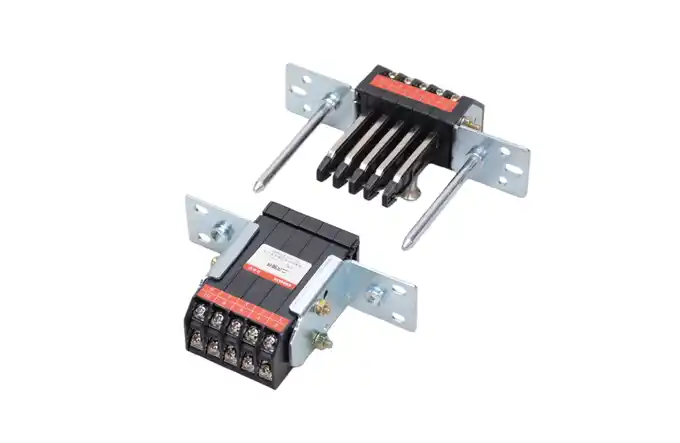
Secondary disconnects: Inspect the control-wiring plug or sliding contacts. Bent pins or debris in the socket cause intermittent trip circuit faults that are notoriously difficult to troubleshoot later.
Guide rails and rollers: Wipe them clean. Grit on the rails creates the misalignment that leads to forced insertion — the single biggest danger in this entire procedure.
Interlock mechanism: Actuate the shutter and racking interlock by hand (when safe) to confirm it moves freely and blocks the shutter when the unit is not in the fully connected position.
If you find signs of wear or damage, tag the unit out. No amount of careful insertion technique will compensate for a cracked contact arm or a seized interlock.
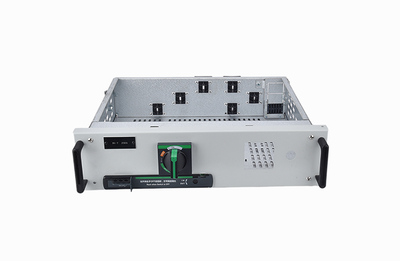
Slide the unit into the disconnected position slowly. At this stage, the primary contacts are still separated from the bus by the shutter.
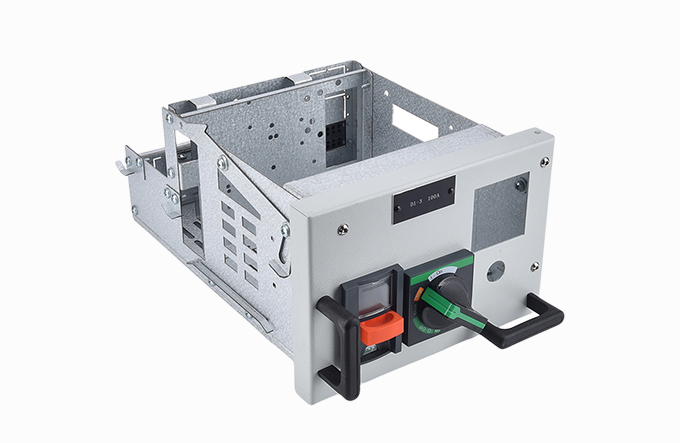
Let the rails do the work. A well-designed switchgear cabinet drawer (also called a withdrawable functional unit) uses precision guide rails that self-centre the unit as you push. If the unit stops or binds before the racking mechanism engages, pull it back and check for obstruction — never muscle it in.
Listen for the “click.” Most units have a positive stop that tells you when the unit is in the disconnected or test position. This is where you connect the secondary control plug without risking contact with the main bus.
It’s at this alignment stage that the underlying quality of the drawer unit becomes most apparent. Units manufactured with precision-formed steel guide plates and close-tolerance rollers slide in with almost no side play, dramatically reducing the chance of misalignment. If you repeatedly struggle with the same unit, it may be time to consider a modern replacement that puts safety engineering first. See MOLDVOLT’s drawout functional unit range for designs that eliminate insertion guesswork.
With the secondary plug connected and the unit in the test position, you’re about to move the primary contacts onto the live bus (if the board is energised downstream of the main).
Insert the racking handle fully. A partially engaged handle can slip and cause sudden movement.
Turn steadily. Apply even rotational force. If you feel the torque increase sharply and the unit hasn’t reached the connected position, stop. A sudden torque spike often means the interlock is blocking the racking screw because the shutter hasn’t opened, or the unit is out of alignment.
Watch the position indicator. Drawout units built to IEC 61439-2 requirements include clear visual flags that show “disconnected,” “test,” and “connected.” Trust the indicator, not your instinct about how many turns you think you’ve made.
A common root cause of racking incidents is an interlock that has been deliberately defeated or has worn out. In high-quality drawer units, the mechanical interlock is designed as a single-piece forged cam rather than a multi-part assembly, making it far less prone to fatigue or field tampering. Explore MOLDVOLT’s withdrawable modules with integrated safety interlocks — engineered for repetitive maintenance cycles.
Once the unit is in the connected position:
Lock it in place. Most compartments accept a padlock on the racking access port. Use it. This prevents inadvertent racking out under load — a violation of safe work practices and a direct path to a severe arc flash.
Test the control circuit. Before closing the main breaker, verify that the trip circuit, status indicators, and any remote monitoring signals function correctly. A meter or test kit inserted into the test sockets can confirm the secondary circuit integrity.
Measure contact resistance (if protocol requires it). Use a micro-ohmmeter between the incoming and outgoing terminals of the same phase. Record the reading and compare it with the factory test values. A rise of more than 50% warrants an investigation.
Mistake 1: Forcing the unit past the test position.
The resistance you feel is often the interlock trying to protect you. Bypassing it — by pushing harder or using a longer handle — can rack the unit into the bus with the shutter partially closed, causing arc-over.
Mistake 2: Skipping the post-insertion pull-test.
Gently tug the unit outward after locking. If it moves more than 1–2 mm, the racking screw hasn’t fully seated the contacts. A loose connection will heat up and degrade rapidly under load.
Mistake 3: Treating all drawer units as identical.
A 630 A motor starter drawer and a 3200 A ACB on rails have vastly different mechanical forces and interlock logic. Never assume the “feel” from one unit transfers to another. Always check the manual for the specific switchgear cabinet drawer you are handling.
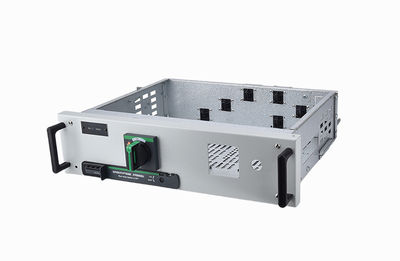
Even a flawless insertion technique cannot compensate for a poorly manufactured drawer unit. When evaluating new or retrofit equipment, look for:
Type-tested assemblies compliant with IEC 61439-1/2. The standard mandates short-circuit withstand tests and mechanical endurance cycles that push drawer units to their limits.
Clear position indication that can be seen without opening the door. Some units provide three distinct mechanical flags visible through a viewing window.
“Fool-proof” interlocking that prevents closing or opening the main contacts unless the unit is in the correct position — and prevents racking unless the breaker is open.
Ergonomic racking handles that require low insertion force. A unit that needs excessive torque to move is either binding or poorly designed.
If you want to upgrade your maintenance workflow with drawer units that incorporate these safety features as standard, MOLDVOLT offers a configurable platform of drawout functional units. The units are built with precision guide rails, forged interlocks, and trip-free racking mechanisms that make the insertion procedure faster and far less prone to operator error. Discover the full range of configurable drawout functional units and find the right module for your switchgear project.
Inserting a drawer unit safely isn’t just about following the right sequence — it’s about having the right equipment, maintained correctly, operated by someone who knows what each “click” and resistance feels like. The next time you rack in a withdrawable unit, slow down, look, listen, and trust the interlocks. They were put there for a reason.
*Disclaimer: This guide provides general safety principles. Always follow the manufacturer’s instruction manual and your site-specific electrical safety program. Relevant standards include IEC 61439-2, NFPA 70E, and local wiring regulations.*
pubdate: 2025/10/09 2026/07/15
How to Organize Spare Parts for LV Cabinetspubdate: 2025/10/09 2026/07/07
5 Daily Checks for Drawer Switchgear – A Maintenance Technician’s Guidepubdate: 2025/10/09 2026/06/30
Solve Loose Plug‑in Contact Connection