When a circuit breaker trips deep inside a manufacturing line at 2:00 a.m., every minute of downtime translates into lost revenue. The maintenance technician rushes to the switchgear room, tools in hand. If the installation follows a fixed design, replacing the faulty breaker means disconnecting busbar connections, unbolting heavy components, and working inside a confined, potentially energized compartment. The line stays dead for hours. If the equipment is built around a withdrawable configuration, the swap can happen in under 15 minutes. This single scenario lies at the heart of the drawout vs fixed switchgear debate – a decision that facility managers and electrical engineers wrestle with long before the emergency ever occurs.
Safety protocols, budget constraints, and long-term serviceability all hang on this early design choice. Yet the discussion is often reduced to a simple number: purchase price. That number alone rarely tells the full story, as leading industry guidelines such as IEEE C37.20 and IEC 62271 make clear through their stringent requirements for both fixed and removable elements. To make a truly informed decision, we need to examine how the two architectures perform across the dimensions that matter most when the power is on – and when it isn’t.
The most immediate operational difference lies in what happens during a breaker failure or a scheduled primary-injection test. In a fixed switchgear assembly, the circuit breaker is hard-bolted or mechanically tied into the busbar compartment. Removing it requires shutting down the entire bus section, racking out incoming supply, lifting heavy panels, and often working with live adjacent cells. Maintenance crews must follow rigorous lockout/tagout procedures under NFPA 70E, and the physical effort extends downtime considerably. One case study from a Midwest automotive plant recorded an average repair time of 4.2 hours for a fixed breaker fault, compared to 1.1 hours for a draw-out unit performing the same function – a nearly fourfold difference.
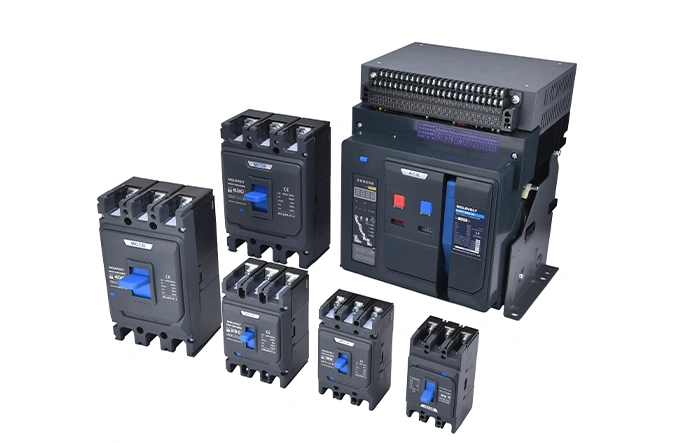
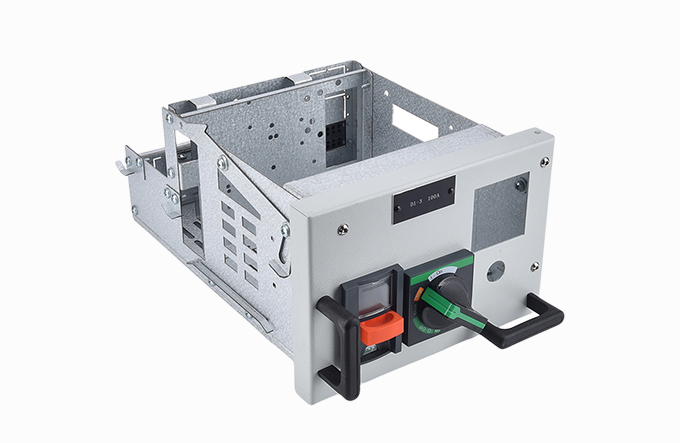
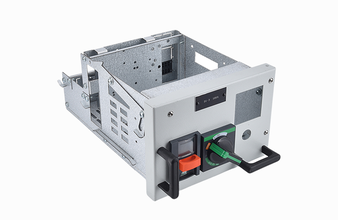
A withdrawable design isolates the breaker on a movable carriage. Technicians simply open the door, insert a racking handle, and roll the breaker out onto a transportation trolley once the shutters automatically close over the live busbar stabs. Many modern withdrawable units, with integrated safety shutters and positive misalignment protection, now make it possible to perform a breaker swap without exposing personnel to energized conductors at all. For facilities where continuous process operation is essential, this speed advantage directly protects revenue.
Every human interaction with electrical equipment carries risk. The arc-flash boundary, incident energy levels, and shock hazard categories defined by IEEE 1584 guide the PPE requirements for each task. Fixed switchgear tends to increase exposure because tasks such as cleaning contacts, inspecting arc chutes, or verifying torque values often require working in close proximity to exposed busbars. Even with doors open, the maintenance person operates within the restricted approach boundary.
Drawout construction fundamentally shifts the risk profile. Because the breaker can be fully separated from the energized section and wheeled away to a service bench, live work inside the compartment becomes unnecessary. The automatic shutters, when properly tested and maintained, create a physical barrier between the technician and the busbar stabs. This isolation is the reason many safety-conscious industries – data centers, water treatment plants, pharmaceutical manufacturing – have been moving toward fully withdrawable circuit breaker compartments as their baseline specification, despite a higher initial capital outlay. Compliance with OSHA 1910.269 and the latest edition of NFPA 70E becomes substantially easier when the equipment design inherently reduces exposure.
One of the most persistent myths in electrical equipment procurement is that fixed switchgear is always cheaper. The reality is more nuanced. A fixed unit typically requires fewer precision metal parts – no telescopic rails, no self-aligning primary disconnects, no shutter mechanism – so the factory invoice is indeed lower, often by 15–25% compared with an equivalent draw-out cell. That savings can be attractive for a project with tight capital expenditure limits or for simple distribution feeders where maintenance is rare.
However, the economics look different over a 20‑year installation life. A European reliability survey published by a major transmission operator in 2022 tracked maintenance costs across 300 substation bays. The data showed that drawout switchgear, despite higher upfront costs, incurred 38% lower annual maintenance labor costs and 22% fewer hours of planned shutdown compared with fixed installations of the same ampacity and voltage class. When factoring in the production losses avoided and the extended service life of breakers that can be easily bench-tested, the total cost of ownership often tilts in favor of the withdrawable design.
| Comparison Dimension | Fixed Switchgear | Drawout Switchgear |
| Initial equipment cost | Lower (baseline) | 15–25% higher |
| Avg. breaker replacement time | 3–6 hours | 0.5–1 hour |
| Live work exposure | Higher – in-cell servicing common | Lower – breaker isolated on bench |
| Busbar shutdown needed for breaker work | Yes, section-wide | No, single cell isolation |
| Space requirement | Slightly smaller footprint | Requires additional depth for racking |
| Typical application | Simple radial feeders, low-duty-cycle loads | Critical process loads, frequent switching, where downtime is costly |
Despite the clear operational advantages of drawout gear, fixed construction is not obsolete. For auxiliary power distribution in commercial buildings, lighting panelboards with permanently mounted breakers, or generator paralleling switchgear that rarely requires internal component service, fixed designs remain completely appropriate. The key is honesty about the application: if the breaker is expected to operate fewer than 10 full-load interruptions over its service life and the electrical room is easily accessible, the extra investment in withdrawability may never deliver a return.
The calculation changes dramatically when the load is critical, switching is frequent, or downtime generates contractual penalties. Here, the decision should lean toward equipment that enables fast, safe, and isolated maintenance, because the cost of a single extended outage can dwarf the premium paid for drawout construction.
Selecting between the two architectures is ultimately a risk management exercise. Begin by mapping the electrical single-line diagram and highlighting every breaker position that, if taken out of service, would stop production or compromise life safety. For those positions, specify a fully withdrawable circuit breaker compartment that meets IEC 62271‑200 or applicable ANSI standards. For the remaining positions, evaluate whether the lower first cost of fixed gear genuinely offsets the higher maintenance effort over the asset’s lifetime. Reference a third-party arc-flash study if available, and involve the maintenance team early – their experience with racking, testing, and cleaning will surface practical requirements that specifiers often overlook.
Many engineering teams today find that a hybrid approach works best: drawout units for mains and critical feeders, fixed units for lightly loaded distribution. The consistency of one manufacturer’s product line across both types can simplify spare parts management and training. If you are looking for equipment that combines the safety isolation of a withdrawable mechanism with an emphasis on service accessibility, MOLDVOLT’s design approach focuses on precisely that intersection – integrating automatic safety shutters, clear racking position indicators, and trolley-friendly front access to make maintenance a task measured in minutes, not hours.
For facilities operating in continuous-process environments, the difference between a fixed and a drawout design often becomes painfully clear during the first unscheduled repair. The chance to avoid that pain starts on the drawing board, long before the first cable is landed. Explore specifications that prioritize personnel safety and operational uptime by reviewing available switchgear configurations that match your critical feeder list.
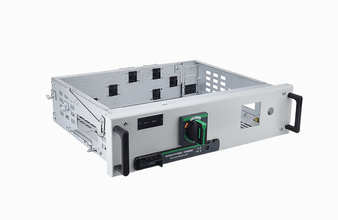
Sometimes the most valuable insurance policy in an electrical room isn’t a piece of paper – it’s the ability to pull a faulty breaker, slide in a spare, and have the line running again before the plant manager finishes their coffee. That capability starts with a simple design philosophy: put maintainability and human safety ahead of upfront component savings. If your current project involves feeders that simply cannot be offline for long, it may be time to look at how modern withdrawable technology can change the outage equation for your team.
Disclaimer: The cost estimates and reliability figures cited are drawn from publicly available industry surveys and are intended for general comparison only. Actual values will vary based on installation conditions, maintenance practices, and regional labor rates. Always refer to manufacturer documentation and a qualified electrical safety professional when making procurement decisions.
pubdate: 2025/10/09 2026/07/15
How to Organize Spare Parts for LV Cabinetspubdate: 2025/10/09 2026/07/07
5 Daily Checks for Drawer Switchgear – A Maintenance Technician’s Guidepubdate: 2025/10/09 2026/06/30
Solve Loose Plug‑in Contact Connection