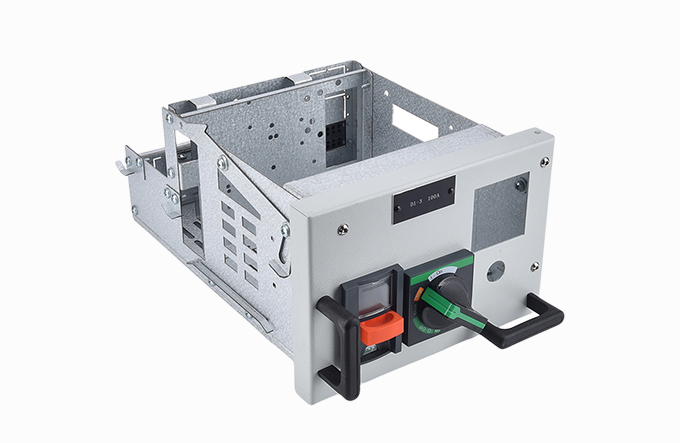
Last summer, a food processing plant in the Midwest lost six hours of production because a single withdrawable feeder module refused to rack back into its compartment after a routine maintenance shutdown. The reason wasn’t a major electrical fault. It was a bent interlock guide pin—a mechanical detail nobody thought to check when the gear was originally purchased. The plant manager later told me: “We spent tens of thousands on the switchgear, but a fifty-cent stamped part decided our uptime.”
That story isn’t rare. Across industries—from data centers to water treatment plants—the weakest link in a low-voltage distribution assembly is often the component that moves. The switchgear drawer (also called a draw-out unit or withdrawable module) is that component. It promises flexibility: plug-in connectivity, rapid replacement, and easy isolation. But when it disappoints, the consequences are measured in downtime hours, not parts cost.
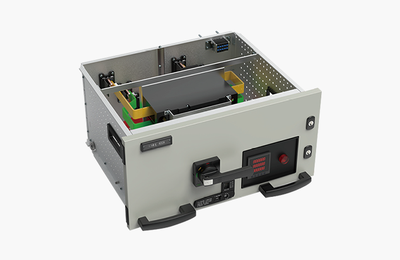
If you’re about to evaluate, tender, or replace these modular power trays, a few minutes of reading now can spare you years of trouble later.
Most spec sheets look alike. Rated operational voltage, insulation voltage, rated current, short-circuit withstand strength—all numbers you can compare in a spreadsheet. The problem is what the spreadsheet doesn’t show.
A large automotive assembly plant upgraded its LV boards three years ago. Within 18 months, two identical motor feeder drawers began showing temperature rise above the limits prescribed by IEC 61439-1. Thermal imaging revealed hot spots at the main contact clusters, but the root cause wasn’t the contacts themselves. It was a tolerance mismatch between the drawer chassis and the compartment rails, causing a few millimeters of misalignment. That tiny offset increased contact resistance just enough to push the assembly beyond its design temperature on a fully loaded 400 A circuit. The fix required a shutdown, busbar rework, and eight weeks of engineering time.
The cost of a switchgear drawer failure doesn’t arrive as a line item in the initial purchase order. It walks in later, dressed as lost production, emergency service calls, and relationships strained with your operations team.
In my years commissioning low-voltage assemblies, I’ve learned one lesson the hard way: mechanical robustness is not a “nice-to-have” add-on; it’s the baseline for every other electrical parameter.
The IEC 61439 series is the globally recognized standard for low-voltage switchgear and controlgear assemblies. It mandates type testing for temperature rise, short-circuit withstand, dielectric properties, and mechanical operation. For draw-out modules, it specifies a minimum number of racking operations without wear that impairs function. Good specification engineers always ask for a type-test certificate.
But here’s what a certificate won’t tell you: how the unit behaves after 900 mechanical cycles in a dusty, vibrating environment, or whether the position indication mechanism still shows “Test” when it’s actually partially engaged, or if the sliding shutter leaves a gap wide enough for a maintenance apprentice’s finger. Field experience fills that gap.
A well-known consulting engineer once shared a practical litmus test during a site visit: “Try racking the unit with one hand. If you need to fight it, or if the handle feels different from one drawer to the next in the same lineup, something is wrong with the consistency of fabrication—no certificate will fix that later.” It sounds anecdotal, but it reflects the kind of embedded knowledge that only comes from commissioning hundreds of assemblies.
The interlock system on a withdrawable power tray is a silent guardian. It prevents you from racking a closed breaker into or out of the busbar position, ensures the earth connection makes-first and breaks-last, and blocks the door from opening while the circuit is live. When it works, nobody thinks about it. When it fails, it makes itself known.
Here are the five most common interlock-related mistakes I see during site acceptance tests:
Assuming all interlocks are mechanical and robust. Some designs rely on plastic cams or flimsy linkage rods that warp under repeated use. A 3.5 mm deflection after 200 operations is enough to prevent the trip-free function from disengaging.
Mixing drawer types from different batches without verifying interchangeability. Even within the same model series, minor die-casting revisions can change fitment. I’ve seen a newer batch of modules fail the isolation test in an older frame because the shutter actuation pin was 1.2 mm shorter.
Ignoring the “Test” position dead zone. The gap between the Test and Connected positions should have a wide, clearly defined mechanical detent. Units without a positive stop can drift, especially on installations with floor vibration from neighboring machinery.
Skipping the door-interlock bypass check for maintenance. In some designs, the quarter-turn door interlock can be defeated with a standard screwdriver. While permitted for qualified personnel, this must be a deliberate action, not something that happens accidentally when a panel cover is misaligned.
Neglecting the padlock provisions. If the draw-out module cannot be locked in the isolated position with at least one padlock, your lockout/tagout procedure won’t be compliant, and nobody will risk maintaining the equipment.
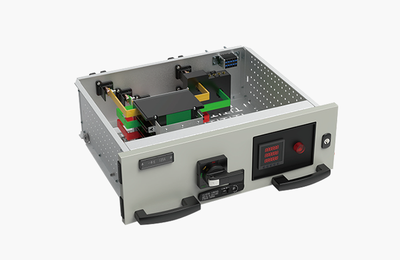
A straightforward pre-qualification step: ask the manufacturer for a video of the interlock function test under the sequence required by IEC 61439-2. If they hesitate, trust your instinct.
Whenever I discuss interlock reliability, this is one area where design philosophy matters more than individual components. Explore interlock safety features that have been verified beyond the factory floor.
There are tests you can’t run on-site (short-circuit withstand, for example), but many of the critical checks require nothing more than your eyes, a torque wrench, and a multimeter. Here’s a practical sequence I recommend for any facility team receiving a new batch of draw-out modules.
Step 1: Visual and dimensional check.
Measure the main contact cluster alignment against the compartment stabs. Use a go/no-go gauge if the manufacturer provides one; if not, verify contact pressure marks after the first insertion. Uneven wiping marks spell trouble.
Step 2: Racking force consistency.
Using a torque wrench or a line worker’s calibrated racking handle, measure the effort through the travel. A sudden spike often indicates binding or foreign material in the drive screw. Record the baseline for future condition-based monitoring.
Step 3: Position indicator verification.
Rack the unit through Connected, Test, and Isolated positions. Confirm the indicator aligns exactly—not approximately—with each status. This is a safety item, not a cosmetic one.
Step 4: Contact resistance test.
With the unit in the Connected position, measure resistance from the outgoing terminal to the corresponding busbar connection point (with the circuit de-energized, of course). Compare against factory values. Large deviations indicate poor contact pressure.
Step 5: Shutter operation.
With the drawer fully withdrawn, verify that the compartment shutters automatically close and cannot be opened without deliberate action. This is your primary defense against accidental contact with live busbars.
Step 6: Thermal inspection under load.
After 48 hours of normal load, use an infrared camera to scan all connection points. The goal is not just to catch a hot spot but to establish a thermal fingerprint for future predictive maintenance.
These six steps take less than an hour per drawer—a small investment next to the cost of an unplanned outage.
With all the technical scrutiny above, you might wonder if the industry is just tolerating avoidable complexity. It’s a fair question. The truth is that modular, withdrawable switchgear remains the right choice for critical facilities where uptime matters and bypassing a faulty unit without de-energizing the entire board is non-negotiable. The opportunity is not in avoiding draw-out technology, but in selecting it differently.
Instead of simply comparing frame ratings and short-circuit kA values, forward-thinking engineering teams now bring a different set of questions to the procurement table:
Can we easily replace a 400 A motor feeder with a 630 A unit using the same compartment footprint?
Does the auxiliary circuit plug disconnect automatically, or is it a separate manual step prone to error?
Are the control wire terminations accessible without fully removing the module?
What is the actual lifecycle cost when you factor in local service support and spares availability?
A senior specification engineer at a major semiconductor fab once summarized it perfectly: “We don’t buy drawers. We buy uptime. The drawer just happens to be the vessel.”
That shift in mindset—from component to outcome—leads naturally to different technical priorities. It elevates the value of field-proven designs, open documentation, and manufacturing repeatability. Those are precisely the areas where some newer players are quietly outpacing legacy suppliers.
Before you specify your next switchgear drawer, consider whether the design supports your maintenance reality, not just your design-day calculations. The gap between the type-test lab and your substation floor is real, and it deserves a solution that has been hardened by field feedback, not just factory simulations.
If you’re looking for a partner that brings this field-informed philosophy into the low-voltage assembly space, XHONELE has taken a refreshingly practical approach—focusing on robust interlocks, verified interchangeability, and the kind of thermal margins that make facility managers sleep better. Discover XHONELE’s solution and see how thoughtful engineering translates into everyday reliability.
Disclaimer: This article draws on general field experience and publicly available standards information. It is not a substitute for professional engineering advice tailored to your specific installation. Always consult a qualified electrical engineer for switchgear selection, testing, and commissioning.
pubdate: 2025/10/09 2026/07/15
How to Organize Spare Parts for LV Cabinetspubdate: 2025/10/09 2026/07/07
5 Daily Checks for Drawer Switchgear – A Maintenance Technician’s Guidepubdate: 2025/10/09 2026/06/30
Solve Loose Plug‑in Contact Connection