When a production line stops unexpectedly, the first thing engineers often check is the power distribution panel. If you’ve ever struggled with a stuck drawer unit or spent hours tracing a loose connection inside a crowded cabinet, you know exactly how frustrating it can be.
Selecting reliable low voltage drawer cabinets isn’t just about matching rated currents – it’s about avoiding daily operation headaches. Below are five field-tested tips to help you make a smarter choice, whether you’re upgrading an old switchroom or planning a new workshop layout.

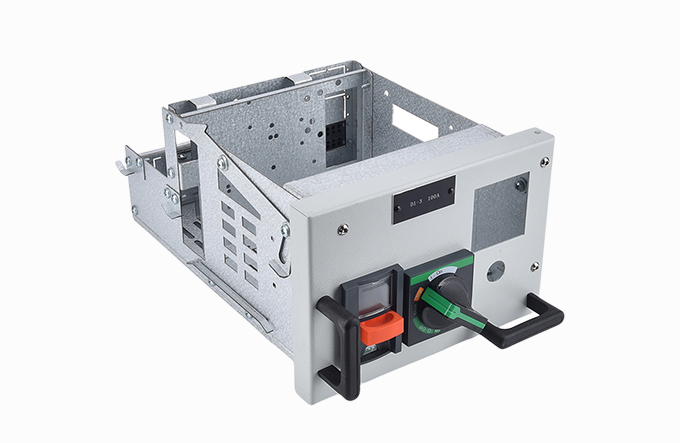
A drawer cabinet might look solid on the outside, but the real quality hides in the insertion and extraction mechanism. In practice, cheap units often use thin guide rails and loose locking handles. After a few maintenance cycles, they wobble, misalign, or fail to connect properly.
What to test:
Pull a drawer out and push it back in. Does it move smoothly with a clear “click” at the end?
Check the secondary disconnect (control contacts). They should engage without forcing.
Look for zinc-plated or stainless-steel hardware – painted mild steel rusts quickly in humid environments.
One plant manager told me they replaced three “budget-friendly” cabinets within two years simply because the drawer mechanisms wore out. The labor cost alone was triple the initial savings.
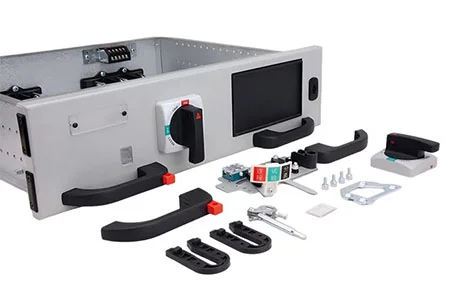
Overheating is the silent killer of electrical components. Many users focus only on the rated current (e.g., 630A or 1000A) but ignore how the cabinet handles heat dissipation. According to IEC 61439-2, temperature rise limits are mandatory, yet not all manufacturers perform full verification.
Key checks:
Does the cabinet design allow natural convection? Vertical busbars in the rear compartment usually perform better than fully enclosed layouts.
Are there ventilation louvers or forced cooling options for high-density sections?
Ask for temperature-rise test reports from a third-party lab (not just a self-declaration).
For example, a food packaging plant in Thailand noticed frequent tripping on their drawout feeders. The root cause was poor air circulation – drawer units were packed too tightly, and the cabinet’s top plate had no vents. Adding a simple fan array solved it, but a better initial design would have avoided three months of unplanned downtime.
This is where many buyers cut corners, only to regret it later. A properly designed low voltage drawer cabinet must prevent two dangerous actions:
Pulling out a drawer while the main contacts are still closed (under load).
Inserting a drawer into an energized busbar system without proper isolation.
What to look for:
A mechanical interlock that forces the drawer to be in “test” or “disconnected” position before removal.
Automatic shutters that cover the fixed contacts when the drawer is withdrawn. Without shutters, you risk accidental finger contact or falling tools causing a short circuit.
I’ve seen a case where an electrician dropped a screwdriver into an open cassette – the resulting arc flash injured two people. That cabinet had no shutters. Spending a little more on fully enclosed shutters is always worth it.
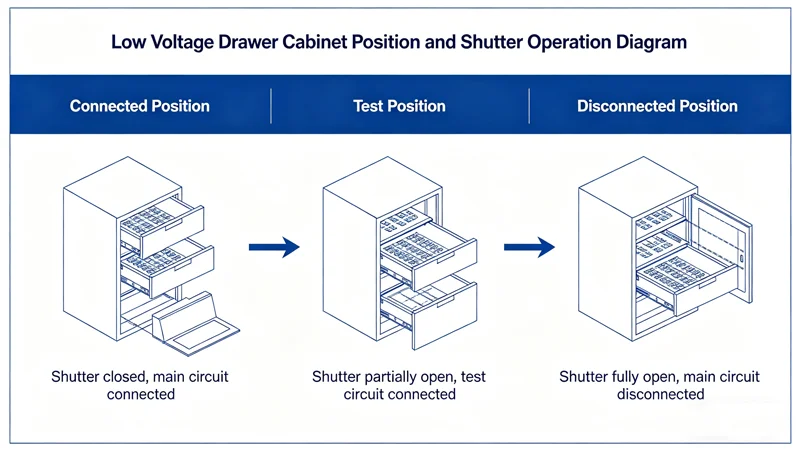
If you want to explore how modern drawer cabinets integrate these safety features, check out XHONELE’s engineering overview – they provide detailed mechanical interlock simulations.
Not every drawer needs to be the same width or height. A common mistake is standardizing on one size (e.g., 8E/4 or 24mm module) without considering future flexibility. Think about how your team actually replaces breakers or adds metering modules.
Practical sizing tips:
Use half-size drawers (e.g., 4E/2) for non-critical feeders – they save space and cost.
Reserve full-height drawers for large incoming or coupling units where you need more wiring room.
Ensure that drawers of the same physical size are electrically interchangeable. Otherwise, you’ll need to stock many different spare units.
A municipal water treatment facility shared their experience: they standardized on one drawer frame but had three different internal wiring configurations. Spare management became a nightmare. They eventually re-wired everything to a uniform scheme, but the lesson was expensive.
Pro tip: Ask the manufacturer for a “drawer interchangeability matrix” before ordering. This small document saves years of confusion.
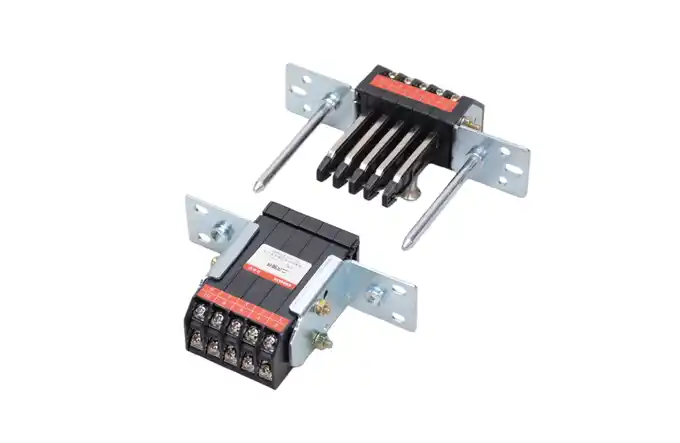
Drawer cabinets are not just about power – they also carry control signals, feedback contacts, and often communication lines (Modbus, Profibus, etc.). The secondary plug (the multi-pin connector on the drawer’s side) is the weakest link.
Common failure modes:
Bent pins after frequent insertion/extraction.
Poor contact due to tin-plated pins instead of gold or silver-plated ones.
No strain relief on cables, causing wire breaks inside the plug.
What to demand:
Gold-plated or duplex-plated pins for low-energy signals.
A guiding mechanism that aligns the plug before pins touch.
Spare pins (usually 20-30% extra) for future retrofits.
According to a 2022 survey by a European electrical association, over 40% of nuisance alarms in drawout switchgear originated from secondary plug issues – not from the main circuit.
So when you evaluate different low voltage drawer cabinets, don’t just look at the breaker brand. Open a drawer and examine that little plug. It will tell you more about engineering care than any datasheet.
Misconception 1: “All drawer cabinets from reputable brands are the same.”
In reality, even well-known brands offer economy lines with thinner metal, simplified shutters, and lower-grade pins. Always verify the specific model you are buying.
Misconception 2: “Higher IP rating is always better.”
IP54 might keep dust out, but it also traps heat. For indoor clean environments, IP30 or IP40 with proper ventilation often gives better long-term reliability.
Misconception 3: “I can mix different brands’ drawers in the same cabinet.”
No, you cannot. Drawer alignment, busbar stab positions, and interlock mechanisms are manufacturer-specific. Stick to one complete system.
By now you have a clear checklist: mechanical smoothness, thermal design, safety shutters, sizing strategy, and secondary plug quality. These five tips come from real maintenance logs and arc flash investigations – not from marketing brochures.
If you are sourcing for an upcoming project or retrofitting an aging switchroom, it helps to work with a supplier who understands both the standard (IEC 61439) and the daily struggles of electrical teams. For a deeper look into how modular drawer cabinets are built and tested, explore XHONELE’s technical resources – their engineering team openly shares temperature rise reports and mechanical cycle test data.
Remember: a well-chosen drawer cabinet stays operational for 20+ years with minimal fuss. A poorly chosen one will haunt you every time you hear the alarm horn.
What has been your biggest headache with low voltage drawer cabinets? Share your story – it might help another engineer avoid the same trap.
pubdate: 2025/10/09 2026/07/07
5 Daily Checks for Drawer Switchgear – A Maintenance Technician’s Guidepubdate: 2025/10/09 2026/06/30
Solve Loose Plug‑in Contact Connectionpubdate: 2025/10/09 2026/06/23
4 Common Insertion Mistakes That Void Warranty