Every facility manager and electrical engineer eventually faces the same quiet pressure: a production line halted by a burnt contactor, a control panel that has no spare room for an extra feeder, or a maintenance window that shrinks to a few hours. In these moments, the structure of your power distribution system stops being an abstract design decision. It becomes the difference between a quick, safe swap and a costly shutdown.
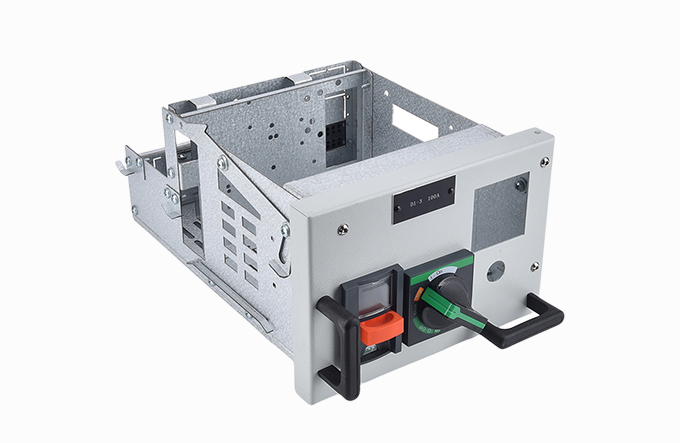
Drawer cabinets (withdrawable unit assemblies) answer this challenge by turning fixed power sections into plug-in modules that can be isolated, removed, and serviced without de‑energizing the entire board. But not all drawer cabinets are built to the same practical standard. The checklist below distills the five factors that really matter when you are selecting a modular power drawer system for installations that need to stay running.
A specification sheet will give you a rated current and a short-circuit withstand value, but those numbers don’t tell the whole story. Start by mapping the actual mix of loads each drawer will serve: direct-on-line motor feeders behave differently from capacitor banks or non‑linear loads that generate harmonics. High inrush currents may push a standard drawer into frequent overheating, while harmonic-rich environments can demand derating or filtration.
Before you compare catalogues, list:
The number and type of outgoing circuits per column.
The load duty cycle – continuous, intermittent, or standby.
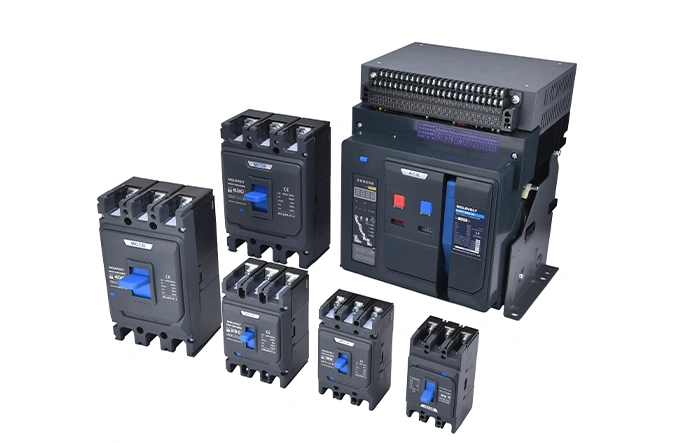
Whether feeder protection will be a molded case circuit breaker, a fused switch, or a compact combination.
This exercise often reveals that a cabinet with a slightly higher nominal rating but a more flexible functional unit arrangement saves money over time, because you avoid having to install an extra panel just to accommodate a single 630 A motor feeder six months later.
If there is one factor that separates a cabinet you trust from one you only tolerate, it is the mechanical safety interlock. A well-designed drawer unit should have a clear, three-position mechanism: connected, test, and isolated. The interlock must prevent any attempt to withdraw the unit while the main contacts are closed, and equally, it must block the racking-in process if the door is open.
What often gets overlooked is the quality of the arc path. When a fault occurs inside a drawer, the cabinet’s internal compartment should channel ionized gases away from the operator and from adjacent functional units. Look for features such as:
Compartmentalized arc vents per drawer.
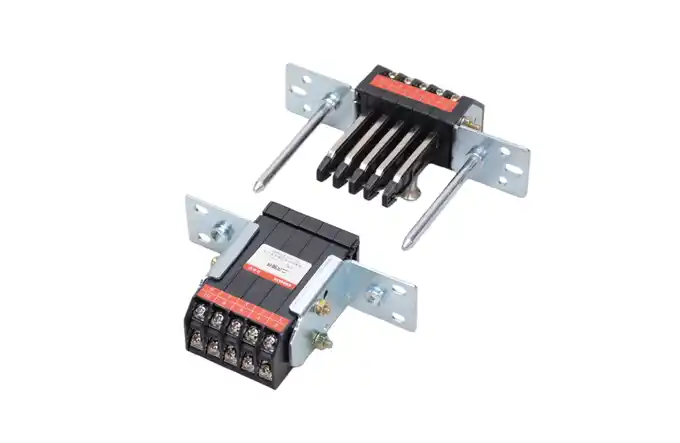
Metallic shutters that automatically cover live busbar contacts upon withdrawal.
A mechanical flag clearly indicating the unit position, even to a technician who has never touched that model before.
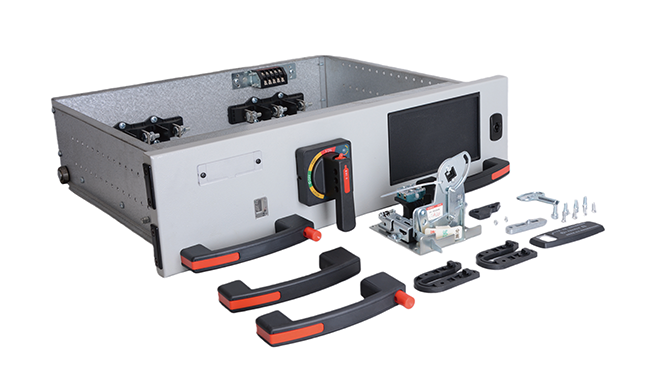
If your site has a history of flashover events or you are planning to install equipment in a dusty, high-humidity environment, it is worth reviewing arc test reports that go beyond the mandatory type tests. Many engineers are surprised to learn that a unit passing a 50 kA internal arc test at the lab can still pose a risk in a poorly ventilated basement if the pressure relief path is obstructed. At this stage, you might want to review specific safety configurations for withdrawable units that have been validated under harsh field conditions.
Modularity is a word that appears in almost every brochure. The practical test is simpler: can you take a size‑2 drawer from feeder column A and insert it into an empty slot in column B, with no re‑engineering, within a standard maintenance window?
Genuine modularity requires common height increments (often 25 mm or 50 mm multiples), identical busbar contact alignment, and a standardized secondary wiring interface. When a cabinet family achieves this, the benefits go beyond convenience. An industrial facility that standardizes on one drawer family can keep one or two spare units in the store, dramatically reducing the time to restore power after a major fault.
Pay attention to the secondary connectors – the 24 V DC control circuit plugs that often cause the most phantom trips. Look for gold‑plated or sealed connectors that survive the vibration of a cement plant or the thermal cycling of a solar inverter station. Interchangeability should extend to these control connections, too; otherwise, you will still need a multimeter every time you swap a unit.
Heat is the silent killer of insulation, and drawer cabinets naturally trap more heat than open‑frame panels because of their compartmentalized construction. The IEC 61439‑2 standard sets temperature-rise limits (typically 70 K for busbars, 80 K for circuit breaker terminals), but those numbers are measured in a laboratory with clean filters and ambient 35 °C. In a real installation, dust build‑up on ventilation grilles can push internal temperatures well above the type‑tested limits.
When evaluating a cabinet, ask for temperature-rise data at 80 % and 100 % load, and check whether forced ventilation is required to hit the nameplate rating. A cabinet that relies on natural convection alone will often be quieter and need less auxiliary power, but its rated current may drop by 15–20 % in a 40 °C ambient. MOLDVOLT’s thermal engineering approach in drawer cabinets addresses this by carefully shaping the internal airflow channels, keeping critical junction points within the required limits without oversizing the copperwork—a balance that matters when every square centimeter of panel space counts.
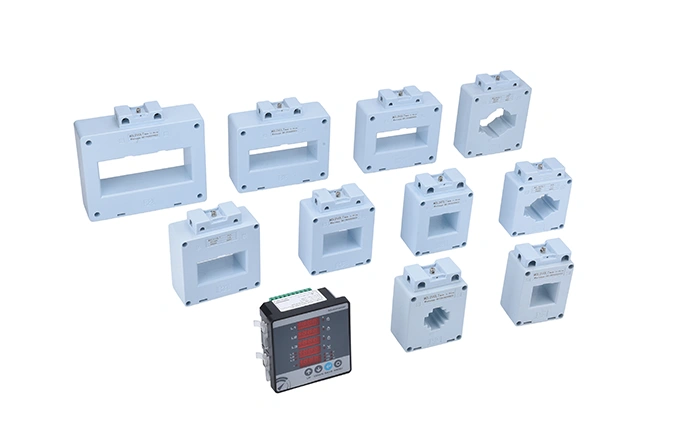
Even a perfectly functioning drawer cabinet will eventually need maintenance. The question is whether you will learn about the need from a scheduled downtime report or from a 3 a.m. call. Modern drawer units increasingly accommodate digital sensors—temperature probes on key busbar joints, partial discharge antennas, and miniature current transformers that feed real‑time data to a plant-wide energy management system.
Think of monitoring in three tiers:
Basic: a voltmeter and ammeter per drawer, with manual readings.
Intermediate: a multi‑function meter with Modbus TCP output, aggregating energy, power quality, and event logs.
Advanced: integrated temperature and humidity sensors that trigger an alarm before a loose connection develops into a flashover.
When the cabinet design makes it easy to retrofit these sensors—using factory‑prepared slot‑in modules rather than field‑drilled holes—the cost of upgrading hundreds of units drops dramatically. This is where the initial drawer cabinet choice has a ten‑year tail. A simple decision today to opt for a monitoring‑ready busbar system can save weeks of retrofitting later.
A few patterns surface repeatedly during site audits:
Chasing the lowest initial price: a cabinet with insufficient busbar cross‑section may pass a factory acceptance test but will force derating on the hottest summer day.
Ignoring the floor-to-ceiling fit: drawer cabinets require clear headroom for ventilation and for a crane to lift out a heavy unit. Installing a cabinet directly under a low beam is an expensive mistake.
Neglecting commissioning verification: primary injection testing of each drawer’s short‑circuit protection is time‑consuming but non‑negotiable if you want the coordination study to hold up in the field.
A drawer cabinet is not a commodity; it is a long‑term operational decision wrapped in a steel enclosure. By weighing functional unit flexibility, verifiable safety interlocks, true modularity, thermal headroom, and monitoring readiness, you shift the conversation from “what does it cost to buy?” to “what does it cost to own over 15 years?”
If you are currently drafting a specification or simply looking for a power distribution solution that doesn’t force compromises on these five fronts, you can explore the MOLDVOLT drawer cabinet platform and request a detailed application review. Sometimes a single technical discussion about arc containment or busbar temperature rise can prevent weeks of rework later.
pubdate: 2025/10/09 2026/06/15
5 Factors for Choosing a Drawer Cabinetpubdate: 2025/10/09 2026/06/08
5 Daily Checks for Drawer Switchgearpubdate: 2025/10/09 2026/06/01
How to Insert a Drawer Unit Safely